The Brand Operating System
Brand isn't a line item.
It's a multiplier.
The ROI is real. The timeline isn't quarterly.
What weak brand actually costs.
Every business pays for brand—either by building one or by not having one.
Without a functioning brand, you pay more to acquire customers. You compete on price because there's no other reason to choose you. Sales cycles drag because trust hasn't been established before the first conversation. You lose talent to companies that stand for something. You spend more on marketing just to stay visible.
These aren't brand problems. They're operational costs. They show up in your P&L, even if "brand" isn't on the line item. The question isn't whether brand has ROI. It's whether you're measuring it—or just paying for its absence.
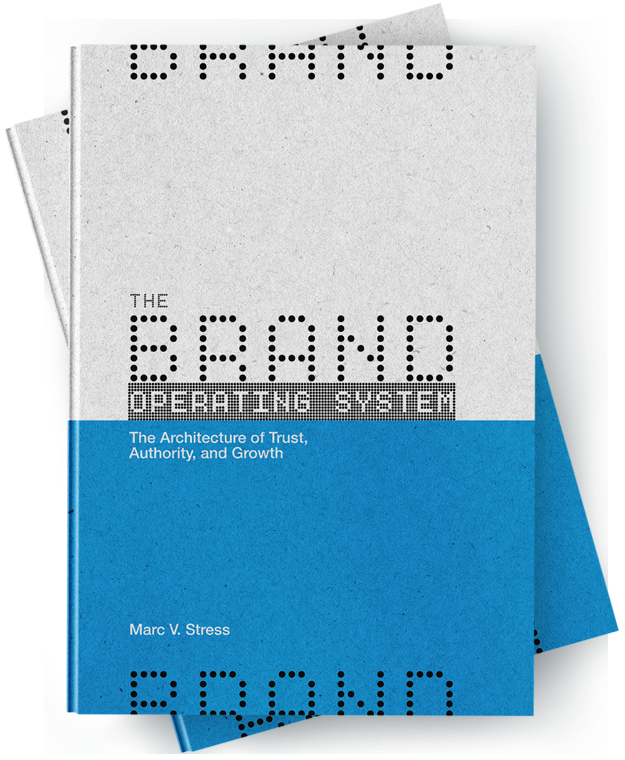
The Book
Go Deeper
The Brand Operating System: The Architecture of Trust, Authority, and Growth is the complete framework—from diagnosing the performance marketing trap to building each component of the system to operating it as your business grows.
The Brand Operating System
The Architecture of Trust, Authority, and Growth
Marc V. Stress Summer 2026 · Oberfeld Press
Brand isn't awareness. It's leverage.
Reduces acquisition cost. A recognized, trusted brand lowers the friction in every transaction. Prospects arrive warmer. Sales conversations start further down the funnel. Referrals come easier. You stop paying a premium to be noticed.
Commands pricing power. Commodities compete on price. Brands compete on value. The structural difference between a 15% margin and a 40% margin often isn't the product—it's the positioning.
Shortens sales cycles. Trust built before the first meeting is worth more than trust built during it. A functioning brand does the work of establishing credibility before your sales team ever picks up the phone.
Attracts and retains talent. People want to work for companies that stand for something. Brand isn't just customer-facing—it's a talent strategy. The cost of replacing an employee runs 50-200% of their salary. A strong brand reduces that churn.
Compounds over time. Marketing spend depreciates the moment the campaign ends. Brand equity accumulates. Every consistent touchpoint, every delivered promise, every clear communication adds to an asset that makes the next investment more efficient.
Who This Book Is For
For CFOs and operators who've been asked to fund "brand initiatives" and want to understand what they're actually buying.
For founders who know they need to build brand but need a framework that connects to business outcomes, not just design awards.
For anyone who's ever asked: "What's the ROI on brand?"—and didn't get a straight answer.
advance praise
""Most branding books are too timid to attempt this."
— David C. Baker, author of The Business of Expertise
About the Author
Marc V. Stress has spent more than 25 years helping organizations understand what brand actually does—and what it costs when it's missing. He founded Stressdesign in 2000, co-founded 76West, and now serves as a Fractional Chief Brand Officer through OK Marc. He is Professor of Practice at Syracuse University's School of Design. The Brand Operating System is his first book.
Speaking & Conversations
Marc is available for podcasts, panels, and keynotes on brand as a business asset, the real cost of weak positioning, and why brand investment compounds.
Get notified when the book is available.
Visit Oberfeld Press for pre-sale announcements, publication updates, and event information.