
In an overstimulated market, novelty loses some of its edge. The brands that matter are increasingly the ones that reduce noise, lower friction, and create confidence through steadiness. Calm is not softness. It is strategic control.
Why Emotional Stability Is the New Competitive Advantage
2026 does not feel especially optimistic. It feels overstimulated.
AI accelerates production. Culture fragments and recombines in real time. Sports, gaming, entertainment, and internet behavior continue to blur together. The feed never stops moving, and the surrounding conditions - economic, social, psychological - ask people to absorb far more noise than they can reasonably metabolize.
In that environment, the old premium on novelty begins to weaken. Constant motion may still attract attention, but attention is no longer the only prize. Increasingly, the brands that matter are the ones that create relief. They are easier to understand, easier to trust, and easier to return to. They do not add to the ambient pressure. They reduce it.
That is why calm is becoming strategic.
The Emotional Climate Shift
For years, many organizations operated under the assumption that brand value was driven by visibility, energy, and velocity. Campaigns became continuous. Messaging multiplied. Refresh cycles tightened. The market rewarded movement, or at least the appearance of movement. But once acceleration becomes the default condition, speed alone stops feeling impressive. It starts feeling expensive.
What people respond to now is steadiness. Not passivity. Not blandness. Steadiness.
That distinction matters. Calm is often confused with softness, when in practice it has much more to do with control. A calm brand is not muted because it lacks conviction. It is composed because it knows what it is doing. It does not need to raise its voice to establish presence. It creates confidence by being legible, consistent, and structurally sound.
Brand as Emotional Infrastructure
Most organizations still treat brand as surface, as decoration.
- Logo.
- Tone.
- Campaign expression.
But in volatile environments, brand functions differently. The brand and the system for managing all its' myriad parts becomes emotional infrastructure. Infrastructure is not decorative. It supports load.
When markets feel unstable, brand must absorb volatility so customers don’t have to. The brand should be the thing your customers look to that's recognizable, mature, stable. This is exercised through:
- Clear positioning
- Consistent narrative
- Predictable experience
- Recognizable voice
- Durable values
When these elements are stable, decision-making becomes easier — internally and externally. Calm is not softness, it is structural clarity. Don’t mistake calmness for weakness.
Don't mistake calmness for weakness.
This is where brand begins to matter at a deeper level. In unstable conditions, brand functions less like decoration and more like emotional infrastructure. It supports interpretation. It reduces ambiguity. It gives people a reliable frame through which to understand what an organization is, what it values, and what kind of experience it is likely to deliver.
When that frame is strong, the effect is cumulative. A clear position lowers cognitive load. A consistent narrative reduces friction. A recognizable tone creates continuity. A disciplined system helps customers and teams alike know what to expect. None of this is cosmetic. It is operational, and in many cases it is where trust begins.
This is one reason nostalgia has returned with such force. People are reaching toward familiarity not only because it is appealing, but because it is stabilizing. In an atmosphere defined by fatigue and fragmentation, the known carries value. Recognition is easier to process than novelty. Memory asks less of the nervous system than constant reinterpretation.
The same principle applies more broadly. Brands that create a feeling of order gain an advantage in moments when the market feels chaotic. They become easier to choose because they are easier to place. Their consistency registers not as repetition, but as confidence.
Humor, Care, and Restraint
Humor, too, works differently in this climate. The most effective humor is not random cleverness or brand self-performance. It is a pressure release. It creates a bit of space in a crowded environment. It lets a brand feel human without becoming flippant. The same can be said for warmth, restraint, and care. These are not aesthetic flourishes. They are cues that an organization understands the emotional conditions in which its audience is operating.
Why This Matters to Leadership
Leadership teams should pay close attention to this. The strategic question is not whether a brand looks calm. It is whether the brand reduces stress or adds to it. Does the organization make itself easier to understand over time, or more complicated? Does it create continuity, or does every new expression feel disconnected from the last? Does it help people orient themselves, or does it ask them to decode yet another shifting signal?
These are not soft questions. They are performance questions.
A brand that produces unnecessary friction will pay for it everywhere else. Teams work harder to explain what should already be clear. Messaging splinters. Experience drifts. Recognition weakens. The whole system spends energy compensating for instability that should have been resolved upstream.
The opposite is also true. A brand that creates steadiness becomes easier to run. Customers understand it more quickly. Internal decisions happen with less drag. The effects compounds. Over time, that kind of coherence becomes a competitive advantage - not because it is flashy, but because it is dependable.
In a noisy market, the composed brand carries farther than the frantic one. That is the real point. Calm is not a visual style or a tone-of-voice preference. It is evidence of underlying order. It tells people that the organization behind the brand knows who it is, what matters, and what does not need to be said twice.
Brands that calm win because they create confidence. And confidence, especially in unstable periods, is one of the most valuable things a brand can offer.
Calm is not aesthetic.
It is architecture.
Is Your Brand Creating Friction or Relief?
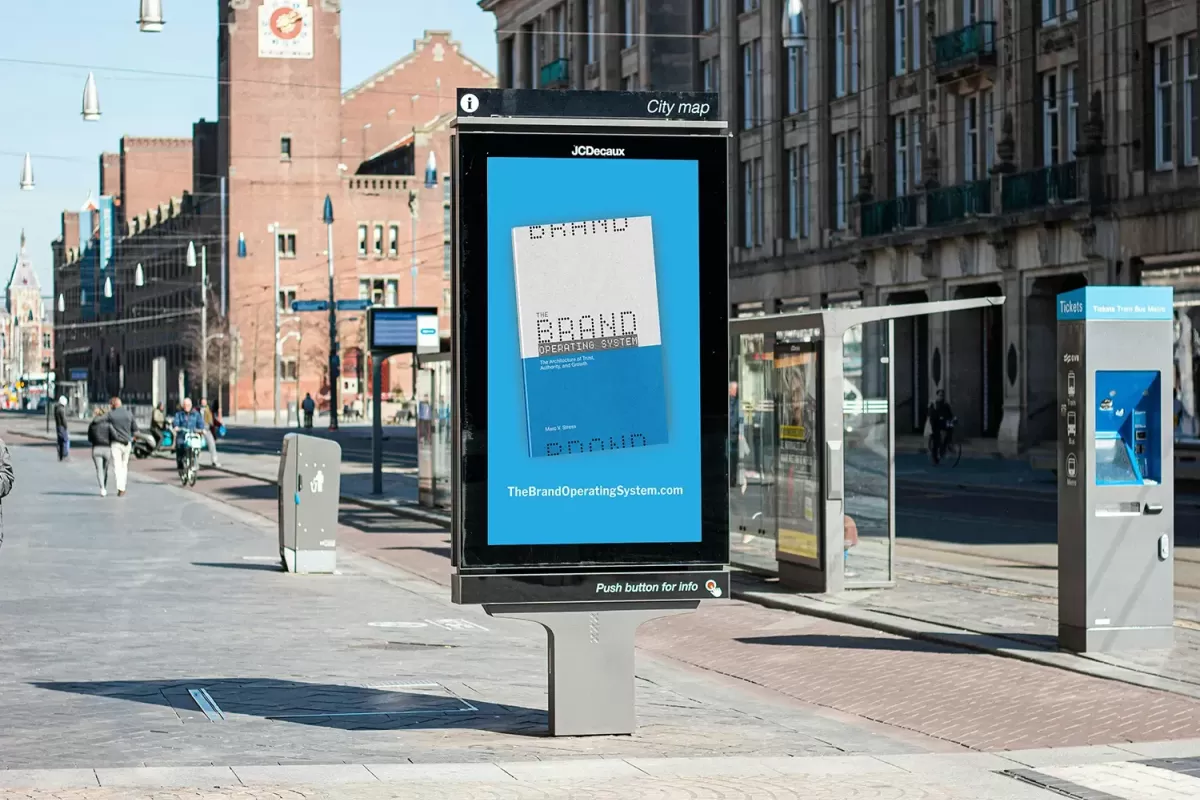
The Brand Operating System launches Summer 2026. Visit Oberfeld Press to get notified when presale opens →
Image: Helen Pashgian, Untitled (Lens), 2023. Photograph by Marc Stress, 2024.