

What gets dismissed as style is often doing something deeper. In unstable conditions, nostalgia functions less like retro taste and more like emotional structure — lowering cognitive load, creating continuity, and restoring a sense of orientation. For brands, that matters. The question is not whether to borrow from the past, but whether your brand is providing the kind of familiarity people increasingly value in the present.
Nostalgia is often mistaken for style.
It gets read through surface cues: familiar typography, revived palettes, older interfaces, references pulled from moments that now feel cleaner, simpler, or somehow more whole. In that reading, nostalgia becomes decorative — a recurring aesthetic preference, another cycle of visual culture turning over on schedule.
That interpretation misses the more important point.
What gives nostalgia its force is not its appearance, but its function. In periods of instability, nostalgia offers orientation. It lowers the effort required to make sense of what is in front of us. It carries emotional context. It creates continuity, or at least the impression of continuity, which in unsettled times can feel just as valuable.
That is why nostalgia keeps returning when the broader environment becomes strained. It is not simply a backward glance, and it is certainly not just sentimentality. More often, it is a way of finding one’s footing in the present. That is especially true now.
The current appetite for nostalgia does not feel trivial or purely stylistic. It feels compensatory. People are not only revisiting earlier cultural forms because they enjoy them, though of course they do. They are also reaching for them because the familiar asks less of us. Familiarity is efficient. Recognition reduces friction. Memory can provide structure when the present feels diffuse, accelerated, and difficult to parse.
So no, nostalgia is not a trend.
It is a stabilization strategy — personal, cultural, and, if we are paying attention, highly instructive for brands. One of the more revealing aspects of the current moment is how recent some of this nostalgia has become. We are not only recycling distant decades. We are already romanticizing periods that are barely behind us.
That kind of compression tells you something. It suggests that the draw is not historical fascination so much as present-tense fatigue. People are looking for conditions that feel more legible than the ones they inhabit now.
Whether those remembered conditions were actually better is almost irrelevant. Nostalgia does not need to be historically accurate in order to be emotionally useful. Its power lies in perceived coherence. It offers the past as something graspable — and therefore reassuring — in contrast to a present that often feels noisy, fragmented, and under constant revision.
For brands, this is where the conversation usually goes sideways.
Most organizations treat nostalgia as an aesthetic device. They borrow the visual shorthand of an earlier era, wrap a message in retro cues, and assume the reference itself will do the strategic work. Sometimes that produces attention. Occasionally it produces affection. But without a deeper logic beneath it, it rarely produces anything durable.
That is because people are not responding only to how the past looked. They are responding to what it seems to promise: clarity, continuity, warmth, recognizability, a lighter cognitive load. If a brand adopts nostalgic form without delivering any of those qualities in substance, the whole thing thins out quickly. What could have signaled reassurance starts to read as styling.
This is the distinction worth holding onto. Nostalgia works not because it looks old, but because it feels known.
For leadership teams, then, the question is not whether to “use nostalgia.” That framing is too literal and almost always leads to shallow work. The better question is what stabilizing role the brand is playing right now, in this climate, for the people it serves.
That role may show up in a voice that feels composed rather than reactive. It may live in a visual system disciplined enough to remain recognizable instead of endlessly refreshing itself in search of attention. It may appear in messaging that favors clarity over novelty, or in an experience that feels reliable rather than theatrically disruptive. None of this is nostalgic in a narrow visual sense. All of it, however, responds to the same underlying need: the need for coherence.
And coherence has become more valuable than many organizations realize.
We talk constantly about differentiation, as we should. But in overstimulated markets, intelligibility matters just as much. People do not always choose what is most original. They very often choose what they can understand quickly, place confidently, and return to without effort. Recognition shortens the distance to trust. Familiarity reduces the burden of interpretation. A brand that can create those conditions gains an advantage that is not cosmetic. It is structural.
This is one of the quiet truths underneath the nostalgia conversation: memory is not peripheral to brand performance. Memory is part of the mechanism.
A brand that establishes continuity over time becomes easier to believe in. Easier to navigate. Easier to choose. Not because it is frozen, and certainly not because it is trapped in sentiment, but because it knows how to remain itself while the surrounding environment keeps changing.
That is the real opportunity here. Not retreat, but steadiness.
A serious brand cannot build its future by hiding in borrowed feeling. Nor should it confuse consistency with stasis. The goal is not to become retro. The goal is to understand what nostalgia reveals about the emotional demands of the present, then translate that understanding into a contemporary system.
The goal is not to become retro. The goal is to understand what nostalgia reveals about the emotional demands of the present…
That may mean preserving recognizable behaviors while evolving execution. It may mean resisting unnecessary reinvention. It may mean designing for continuity in a culture addicted to refresh. Most of all, it means recognizing that in an accelerated environment, stability is not a compromise. It is an asset.
Leadership teams should take that seriously, because the implications are operational as much as emotional.
When a brand lacks continuity, the system around it has to compensate. Teams spend time explaining what should already be understood. Messaging drifts. Decisions get made in fragments. New outputs work too hard because there is not enough established meaning underneath them to carry the load. Instability at the brand level has a way of becoming inefficiency everywhere else.
This goes both ways. A brand that creates the right kind of familiarity becomes easier to run. It aligns teams more naturally. It reduces interpretive drag. Customers know what to expect. Over time, that consistency compounds into something more powerful than novelty: confidence.
That is why nostalgia deserves a more serious reading than it usually gets. It is not just a recurring cultural aesthetic. It is a signal. It tells us that people are tired, that coherence is scarce, and that familiarity has regained strategic value.
The lesson is not that brands should look backward more aggressively. It is that they should pay closer attention to what the renewed appeal of the past is telling us about the present.
In unstable periods, the familiar does real work. Brands that understand that do not merely appear relevant. They become reassuring, and that is often the stronger position.
Tired of Justifying Brand Budget?
The Brand Operating System launches July 15. Visit Oberfeld Press to get notified when presale opens →
Main Image: Marc Stress, Cadillac Del Playa, 2024.
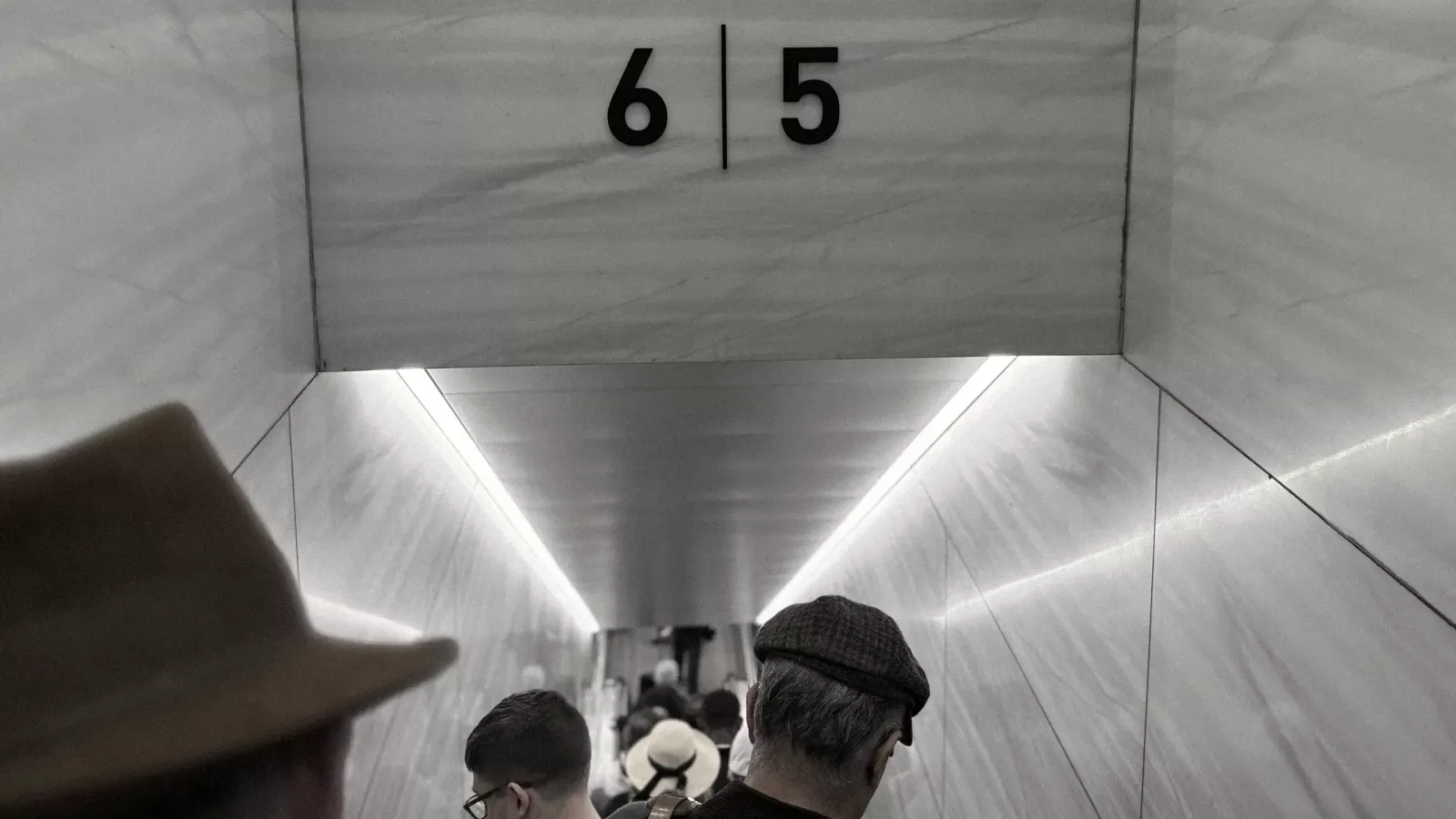
Post Image: Marc Stress, 6 | 5, 2025.